The Quiet Revolution on the Loading Dock: What Shippers Should Know About Warehouse Automation
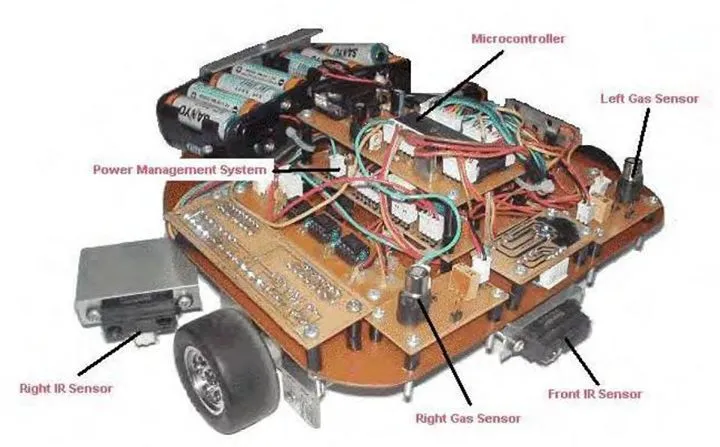
Photo: Emmgon at English Wikipedia, CC BY-SA 3.0, via Wikimedia Commons
Walk into a distribution center in Fontana, California, or Alliance, Texas, and you may notice something odd: nothing. No forklifts roaring past your shoulder, no pallet jacks squealing across concrete, no shouting over the din. Just a fleet of unassuming machines gliding between racks, moving freight with the calm efficiency of a well-run yard. This is the new face of warehouse automation in the United States, and it looks nothing like the robot revolution the trade press promised a decade ago.
The loudest facilities are no longer the most advanced. Increasingly, the operations that move freight fastest are the ones you can barely hear working.
The Machines Moved In Without a Fanfare
The robotics that matter most to shippers today are deliberately unglamorous. Autonomous mobile robots, or AMRs, shuttle inventory to pick stations without fixed conveyor infrastructure. Pallet shuttles ride rails inside racking systems, compressing storage footprints and cutting put-away time. Automated palletizers, once reserved for beverage giants, are now affordable enough for mid-size operations handling mixed SKU loads.
None of this looks like science fiction, and that is precisely the point. The industry's most consequential automation trend has been the quiet substitution of low-drama, high-reliability systems for labor-dependent processes. For shippers, the downstream effects show up in three places: appointment adherence, dwell time, and damage rates.
Why Your Dock Appointments Got More Predictable
If a partner's on-time pickup performance improved noticeably over the past two years, there is a reasonable chance automation had something to do with it. Facilities using AMRs and shuttle systems handle inbound volume spikes with less scramble, because throughput is governed by machine scheduling rather than shift staffing. A facility that can run its outbound staging continuously, rather than in labor-defined waves, can hold appointment windows with far greater discipline.
The effect compounds during peak season. The October-through-December crunch that once stretched warehouse crews past their limits is now absorbed by systems that do not call in sick the week of Black Friday. Shippers who benchmark their carriers' and warehouses' performance across multiple peak cycles will spot the difference: the automated facility degrades gracefully under load, while the labor-constrained one falls off a cliff.
The Real Economics, Without the Hype
Automation is not a magic wand, and shippers should be wary of anyone presenting it that way. A serious deployment involves capital commitments measured in the millions, integration work with existing WMS platforms, and a retraining period during which error rates can temporarily worsen. Facilities that automated hastily sometimes trade labor problems for throughput bottlenecks at exactly the wrong moment.
The payoffs, when managed well, are real. Consistent cycle times. Lower shrinkage. Better inventory accuracy, which translates into fewer shorted orders and fewer corrective invoices. But the strongest operations tend to be those that automated selectively, targeting their worst bottlenecks rather than chasing a fully robotic showpiece. A warehouse that deployed shuttles in its slowest-moving reserve storage while keeping flexible human labor at the fast-pick faces will usually outperform the neighbor that bought a gleaming, underutilized robotic arm for the trade show tour.
How to Evaluate a 3PL's Automation Claims
Automation has become a sales pitch, and not every claim survives scrutiny. Before signing with a partner touting its technology, ask a few pointed questions:
- What specific throughput did the system deliver last quarter, not at the vendor demo? Ask for measured performance, including exception rates.
- How does the facility perform at 110% of forecast volume? Automation that cannot flex has simply moved the bottleneck.
- What happens during a system outage? A credible operator can describe manual fallback procedures in detail. A vague answer is a red flag.
- How does automation affect your freight specifically? If your product is irregular, fragile, or temperature-sensitive, ask which processes the machines touch and which they do not.
Site visits remain the most honest audit available. Listen. A genuinely advanced operation is often a surprisingly calm one, and the hum of a well-integrated system tells you more than any brochure.
The Takeaway for Shippers
Automation will not eliminate the fundamentals of good freight management: clear contracts, accurate documentation, realistic transit expectations. What it does change is the ceiling of reliability a facility can offer. Partners with thoughtfully automated operations can commit to tighter windows and absorb volatility that would break a labor-dependent warehouse.
At Kudos Logistics, we watch these operational trends closely because they shape the commitments we can make on your behalf. The best warehouses in the country are not the ones making the most noise about robots. They are the ones quietly getting your freight out the door, on time, every time.