Before the Doors Close: A Cold Chain Checklist for Shippers Who Can't Afford a Warm Pallet
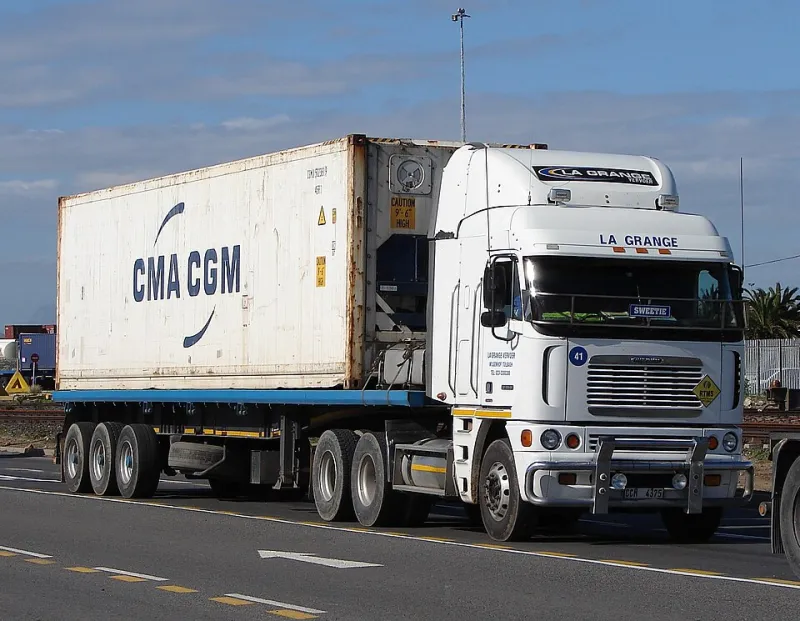
Photo: Col André Kritzinger, CC BY-SA 3.0, via Wikimedia Commons
A dry van that runs late costs you a penalty. A reefer that runs warm costs you the load. That asymmetry is the defining fact of cold chain freight, and it's why shippers of food, pharmaceuticals, and cosmetics need a different playbook than the one that works for general commodity freight.
The good news: most temperature excursions are preventable, and most of the prevention happens before the trailer ever leaves your dock.
Start at the Pallet, Not the Truck
A refrigerated trailer cannot cool product; it can only hold product at temperature. That distinction trips up more shippers than any equipment failure.
- Pre-cool everything. Product, pallets, and packaging should be at spec before loading. A warm case of yogurt dropped into a 34-degree trailer raises the temperature of its neighbors.
- Pre-cool the trailer itself. Require drivers to run the unit to setpoint before loading, and confirm it — a unit that was idling at 60 degrees fifteen minutes prior will take hours to recover.
- Load for airflow. Reefer units move air, not cold. Blocked ceiling and floor channels create warm pockets that a temperature logger in the wrong place will never catch.
Qualifying a Cold Chain Carrier
Not every carrier with a reefer decal is a cold chain carrier. Before you commit a lane, ask for:
- Current reefer maintenance records — unit make, model, and last preventive service date.
- Continuous temperature recorder capability, not just a cab display. You want a downloadable log, ideally with a probe in the return air stream.
- A documented procedure for door openings on multi-stop loads.
- Sanitation history — food shippers should verify wash-out records and, where applicable, FSMA-relevant documentation.
- References on your specific commodity. Moving ice cream and moving fresh flowers are different disciplines sharing one equipment type.
Reading the Download Before You Accept
When the trailer arrives, resist the urge to sign on the strength of a clean dashboard readout. Request the unit's download or your logger's report and look for three things:
- The trendline, not the endpoints. A load that averaged 38 degrees but spent ninety minutes at 46 has a problem the average hides.
- Defrost cycles and door events. Frequent or lengthy defrosts mid-transit can signal a struggling unit or excessive door openings.
- Gaps in the data. A missing hour is not neutral information. Ask what happened during it.
If the data is clean, sign. If it isn't, document before you refuse — photograph the readout, the seal, and the product, and note exceptions on the delivery receipt.
The Moment You Learn of an Excursion
Speed matters more than certainty. Notify the carrier and your QA contact immediately, quarantine the affected product, and preserve the temperature record in its original form. Do not let product move to a distribution center while the question is unresolved, and do not rely on memory — the download file is your claim, so secure it the same day.
Cold chain freight rewards shippers who treat temperature as a specification, not a hope. Build the checklist, demand the logs, and the panic mostly stays out of the process — which is exactly where it belongs.