Underwritten in the Dark: A Shipper's Guide to Cargo Insurance You Can Actually Rely On
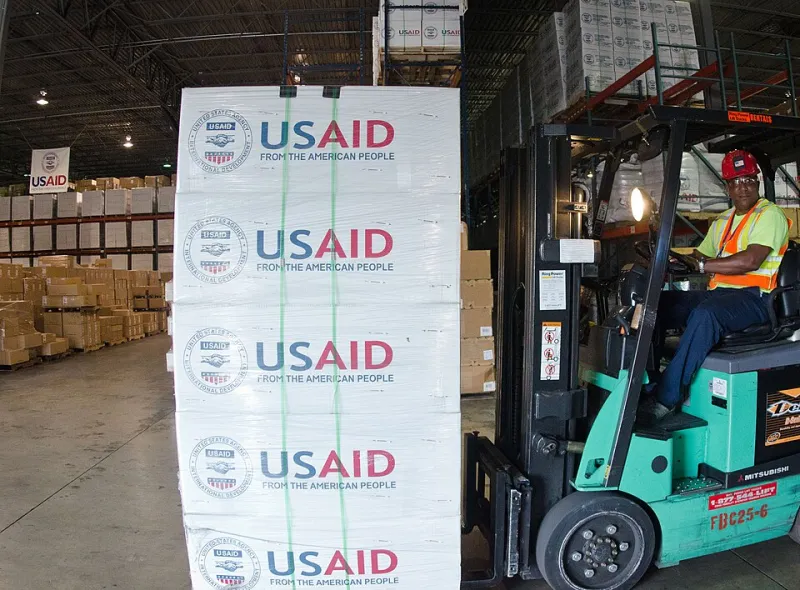
Photo: U.S. Department of Agriculture, Public domain, via Wikimedia Commons
Somewhere between your dock and the customer's receiving bay, a pallet of goods is rolling down an interstate at sixty miles an hour. You will never see it. You may never speak to the driver. And yet, if something goes wrong, the financial consequences land squarely on your desk. That is the quiet bargain of shipping freight in the United States: you are asked to place enormous trust in a process you cannot observe — and to back that trust with real money.
For most shippers, the insurance question is settled in a five-minute phone call with a broker, or worse, never settled at all. The assumption is that someone, somewhere, has it covered. Frequently, that assumption is wrong.
Liability Is Not Insurance
The single most expensive misunderstanding in freight is the belief that a carrier's liability coverage equals protection. It does not. Under Carmack Amendment principles governing interstate motor carriers, a carrier is generally liable for the full actual loss of goods it transports — but nearly every contract you sign includes a released value clause that caps that liability, often to a few dollars per pound.
Run the numbers on a real shipment and the gap becomes obvious. A pallet of consumer electronics weighing 400 pounds might carry a released value of $2 per pound, or $800 total. Its replacement value could easily exceed $30,000. If that pallet is destroyed, the difference is yours to absorb unless you planned for it in advance.
Carrier liability, in short, is a ceiling — and usually a low one. True protection comes from a separate cargo insurance policy, and that policy is only as good as the details you gave the underwriter.
How Underwriters Actually See Your Freight
Cargo insurance is underwritten on specifics, not generalities. When an underwriter prices your policy, they are essentially building a risk profile from a handful of questions:
- What is the commodity? Electronics, pharmaceuticals, liquor, and metals attract theft; lumber does not.
- What is the value density? A truckload of copper wiring is a very different risk than a truckload of insulation.
- How is it packaged and palletized? Crated, shrink-wrapped, and secured freight loses less often.
- Where does it travel and rest? Routes through high-theft corridors, and overnight stops in unsecured lots, both raise rates.
- What are your loss controls? GPS tracking, sealed trailers, driver screening, and vetted carrier rosters all earn discounts.
When shippers describe their freight vaguely — "general merchandise" is a common offender — underwriters price the worst-case version of that description. Worse, an inaccurate commodity declaration can become grounds for denial when a claim is filed. The policy you save money on today can be the one that fails you tomorrow.
Why Claims Get Denied
Denial letters tend to cite a short list of causes, and almost all of them are preventable:
Late notice. Most policies require prompt reporting — often within days, not weeks. A loss discovered on Friday and reported the following month is a problem.
Concealed damage. Freight that appears fine at delivery and fails later must be documented immediately, with photos, inspection notes, and a delivery receipt annotated before the driver leaves.
Excluded commodities. Policies routinely exclude certain goods — jewelry, currency, live animals, sometimes electronics above a stated value — unless specifically endorsed.
Insufficient packaging. If the underwriter concludes the freight was not packaged to industry standards, the claim can collapse. Your packaging choices are part of your insurance posture whether you realize it or not.
Paperwork mismatches. A bill of lading that says one thing and a policy that says another gives the insurer an exit. Consistency across documents is not bureaucracy; it is protection.
The Pre-Dispatch Coverage Checklist
Before the next truck arrives, work through this list. It takes an hour; a single uncovered loss can cost a quarter.
- State the true replacement value, not the invoice cost. Include freight charges and, where applicable, the margin your contract obligates you to replace.
- Match the policy to the commodity. Confirm your goods are not on the exclusion list, and secure endorsements for anything high-value.
- Verify the carrier's cargo certificate directly with the insurer. A photocopy from the broker proves nothing; a verification call does.
- Read the released value clause in every contract. Know the per-pound cap before you sign, and negotiate it for high-density freight.
- Document condition at every handoff. Photographs at loading, sealed trailer numbers on the BOL, and annotated delivery receipts form the evidence chain a claim depends on.
- Know your notice deadlines. Write them on the wall of the traffic office if you have to.
- Review annually. Commodity mixes change; so should coverage.
Trust, Verified
None of this is a counsel of distrust. The overwhelming majority of American freight arrives exactly as it left. But reliability at scale is not built on optimism — it is built on systems that assume the rare bad day and plan for it. Insurance, properly structured, is one of those systems: quiet, unglamorous, and invisible right up until the moment it is the only thing standing between a loss and your balance sheet.
The freight you will never see deserves more than a handshake and a hope. Give it paperwork that holds up, coverage that matches reality, and a process your team can execute under pressure. That is what turning trust into a supply-chain asset looks like.