The Weight of Trust: Why the Best Shippers Treat Freight as a Relationship, Not a Transaction

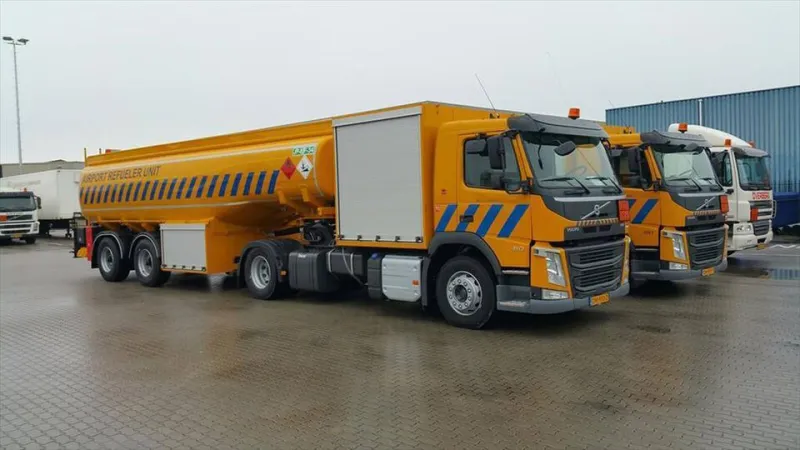
Photo: U.S. Navy photo by Cmdr. Daryl Borgquist, Public domain, via Wikimedia Commons
Every procurement team in America knows the ritual. Quarterly, the bid goes out. Fifteen carriers respond. The spreadsheet gets sorted by rate per mile, the lowest number wins, and the incumbent — the one who hauled through the ice storm, the one who held a trailer overnight so your line didn't stop — gets a form email thanking them for their participation.
It feels rigorous. It feels disciplined. In practice, it is one of the most expensive habits in freight.
What the Lowest Quote Actually Buys You
A rock-bottom rate is a promise made in a vacuum. It says nothing about how a carrier performs when your load competes with thirty others for the same trucks. It says nothing about whether the dispatcher who quoted you will still be handling your freight in March. It says nothing about what happens when the market tightens — and the market always tightens.
Shippers who rotate carriers purely on price discover this the moment conditions turn. During the 2021–2022 capacity crunch, loads that had moved reliably for years suddenly sat uncovered. The carriers who received those emergency calls? Often, they weren't the shippers' historical partners at all. They were whoever happened to hold the cheapest contract that quarter — and when those shippers called asking for a favor, the answer was frequently silence.
The math is unforgiving. A two-cent-per-mile savings on a dedicated lane is worth real money. A single missed production window at a plant in Ohio can erase a quarter's worth of those savings in an afternoon.
How Loyalty Gets Repaid When the Market Turns
Consider two shippers moving comparable volumes out of the Southeast.
The first runs a strict spot-and-switch model. When freight gets scarce, its tenders get declined like everyone else's — and then declined again, because carriers triage their commitments and this shipper has never demonstrated any.
The second has moved the same lanes with the same core carriers for six years. It pays fairly and promptly. It communicates volume forecasts. When its loads got bumped during a hurricane-season squeeze, its primary carrier rerouted a truck from a lower-priority account to cover it. Not because the contract required it — contracts rarely require anything useful in a crisis — but because the relationship did.
That is not sentimentality. That is capacity insurance, and it cannot be purchased on a spot board.
Becoming a Shipper of Choice
The good news is that earning preferred status doesn't require paying premium rates across the board. It requires being the account carriers want to serve. The practical steps are unglamorous:
- Pay on time, every time. Nothing signals reliability faster, and nothing erodes goodwill like invoices that sit for 60 days.
- Reduce dock friction. Carriers talk. Shippers with long detention times and chaotic appointments get quietly deprioritized.
- Share your forecast. Carriers can position equipment for shippers who give them a reason to. Surprise freight gets surprise rates.
- Give honest feedback. Tell your carriers what's working. Silence reads as indifference.
- Reward performance, not just price. Structure agreements so consistency earns something — volume commitments, longer terms, first look at your freight.
None of this means abandoning market discipline. Benchmark your rates. Renegotiate when the data supports it. But treat the negotiation as one chapter in a long relationship rather than a recurring divorce and remarriage.
The Verdict
Freight is not a commodity purchase, however much the procurement playbook pretends otherwise. It is an operational partnership whose value shows up precisely when things go wrong — and things always go wrong eventually.
The shippers who understand this don't just move freight. They build networks that flex when the market seizes, that answer the phone at 3 a.m., that treat their freight as freight worth protecting.
That's not a line item. That's an asset. And unlike the lowest quote, it appreciates.